

|
Solar Panels
Silicon Solar › Solar Panels
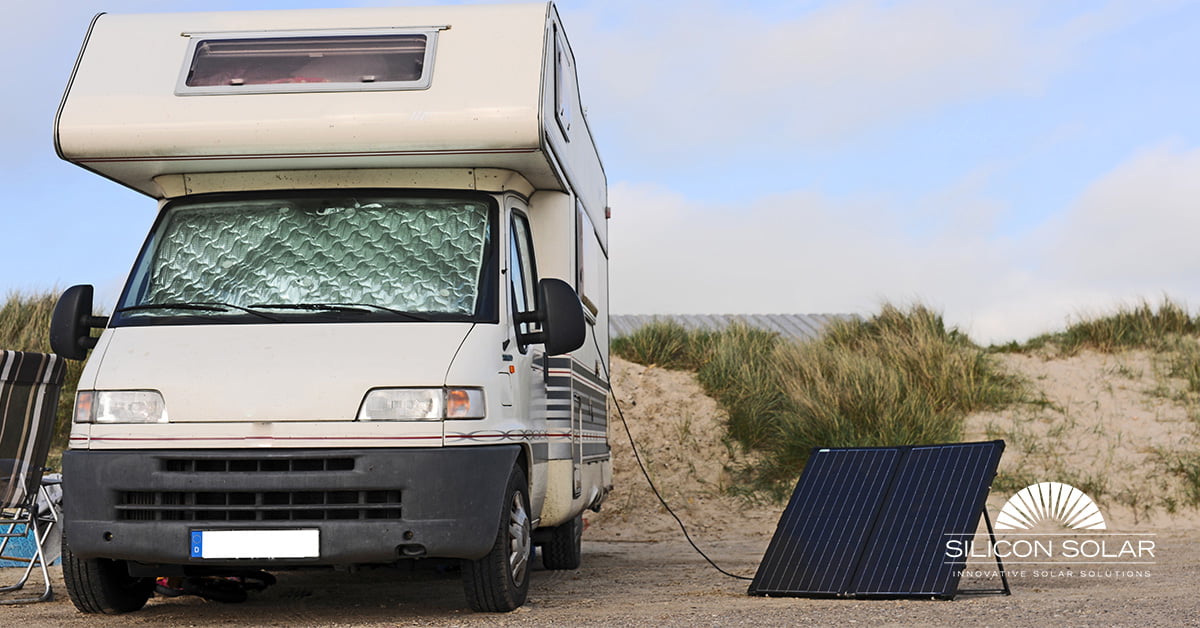
Shop from the largest selection of OEM and name brand solar panels and accessories. Build your own residential power kits, educational kits and battery chargers using the power of the sun.
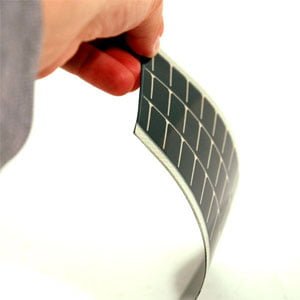
Experiment with the different technologies including flexible amorphous and crystalline solar cell technology.
Solar Panels
Silicon Solar offers a complete line of residential and commercial grade solar modules. We stock the industries leading name brand modules ranging from 0.5W-200W in addition to
our own line of mid-sized mono-crystalline and amorphous cells. Our solar panels can be used to build your own battery chargers, kits and even power your home. If you are interested in purchasing a
complete system for your home, please contact our sales team today for a quotation.
Available Options:
- Mini-Solar Modules: (0-5 Watts)
- Residential Grid Tie & Off grid: (100-200 Watts)
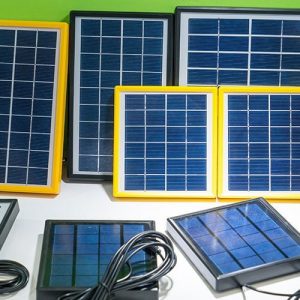
- 12v & 6v Assorted Panels
- Customer OEM Modules
Check out our Visual Directory!
Photovoltaic (PV or solar) cells are made of semiconducting material which directly convert sunlight into electricity. The simplest system of
photovoltaic cells power small devices such as watches and calculators. More complex systems can light houses and provide power to the electrical grid.
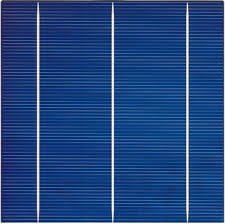
Crystalline silicon (c-Si) is the leading commercial material used for solar panels. The forms it is used in are:
- Monocrystalline
- Polycrystalline
- Ribbon
- Sheet
- Thin-layer silicon
How Solar Panel Works:
When light is absorbed by a semiconductor such as silicon, the electrons within the material increase in energy. This increase in energy causes the electrons to move within the material. However,
there must be charge carriers in order for the electrons to move in a preferred direction to generate an electrical current. Charge carriers are created by doping the semiconductor, which is to say
adding small amounts of impurities to change the material's electrical properties.
Silicon is an element with four valence electrons. This means that when a silicon atom bonds with other silicon atoms, they complete their valence shells by sharing all four electrons. Doping
silicon involves adding small amounts of a material with three valence electrons or a material with five valence electrons. By adding a small amount of aluminum, for example, an atom with three
valence electrons, covalent bonding of the aluminum to silicon creates 'holes'. A 'hole' is the absence of an electron where there would normally be one if there was no impurity bonded to silicon,
which results in a p (positive) -type silicon semiconductor. Adding a small amount of an atom with five valence electrons, such as antimony, causes an opposite effect. Once antimony is bonded to
other silicon atoms, there will be an extra electron that is loosely bound to antimony, which will result in a n (negative) -type silicon semiconductor. Introduction of a voltage to either type of
semiconductor causes current to move in a preferred direction.
A solar panel uses a layer of p-type silicon and a layer of n-type silicon. This way, when light is absorbed and the electrons in the n-type layer increase in energy, the
electrons will be able to travel from the n-type layer to the 'holes' in the p-type layer. This electrical current is what allows solar panel technology to convert light energy into electricity.
Production techniques of solar cells include the Czochralski process, float-zone method, and thin film deposition. The removal of surface impurities and defects in the silicon is of critical
importance, and is addressed with techniques such as surface passivation and gettering.
Silicon based solar panels are not the only type of solar cells. Other types include solar panels that use conductive polymers or light absorbing dyes.
|
Solar Partners

Information
Not sure where to start? Browse our complete selection of our how to guide solar panel articles.
Featured Articles:
- Flexible Solar Panels
- Solar Cells
- New York Solar Panel Systems
- NYSERDA Commercial PV
Featured Products
Solar Home Evaluation
Sign-up today for your free solar home evaluation. We offer solar electric, wind, and solar hot water home evaluations. Simply click on the link below or call us to
speak with a live representative. Calculate your Solar Hot Water and Electric Savings
FREE Solar Evaluation
 |